Plan G-1: swing arc versus slide run-back
Swing, slide, or cantilever, in iron, wood on a steel frame, or ranch pipe. We plan the posts, the footings, and the opener together, so the gate works the day it is hung and years later.
A swing gate needs a clear arc on the inside and fairly level ground to swing across. Plenty of Del Rio lots slope toward the street or toward a drainage, and a swing gate on a slope either drags or has to be hung high with a gap underneath.
A slide gate rolls along the fence line and doesn't care about slope, but it needs room beside the opening to roll back into. Standard slide gates ride on a ground track. On caliche and gravel drives, that track fills with dust and rock, which is the number one reason slide gates jam here.
That makes the cantilever gate the one we recommend most often in Del Rio. It hangs from rollers on posts beside the opening and never touches the ground, so there is no track to fill up. It costs more up front and pays that back in fewer service calls.
Powder-coated steel, open and secure, and the lightest to automate. The natural choice beside an iron fence.
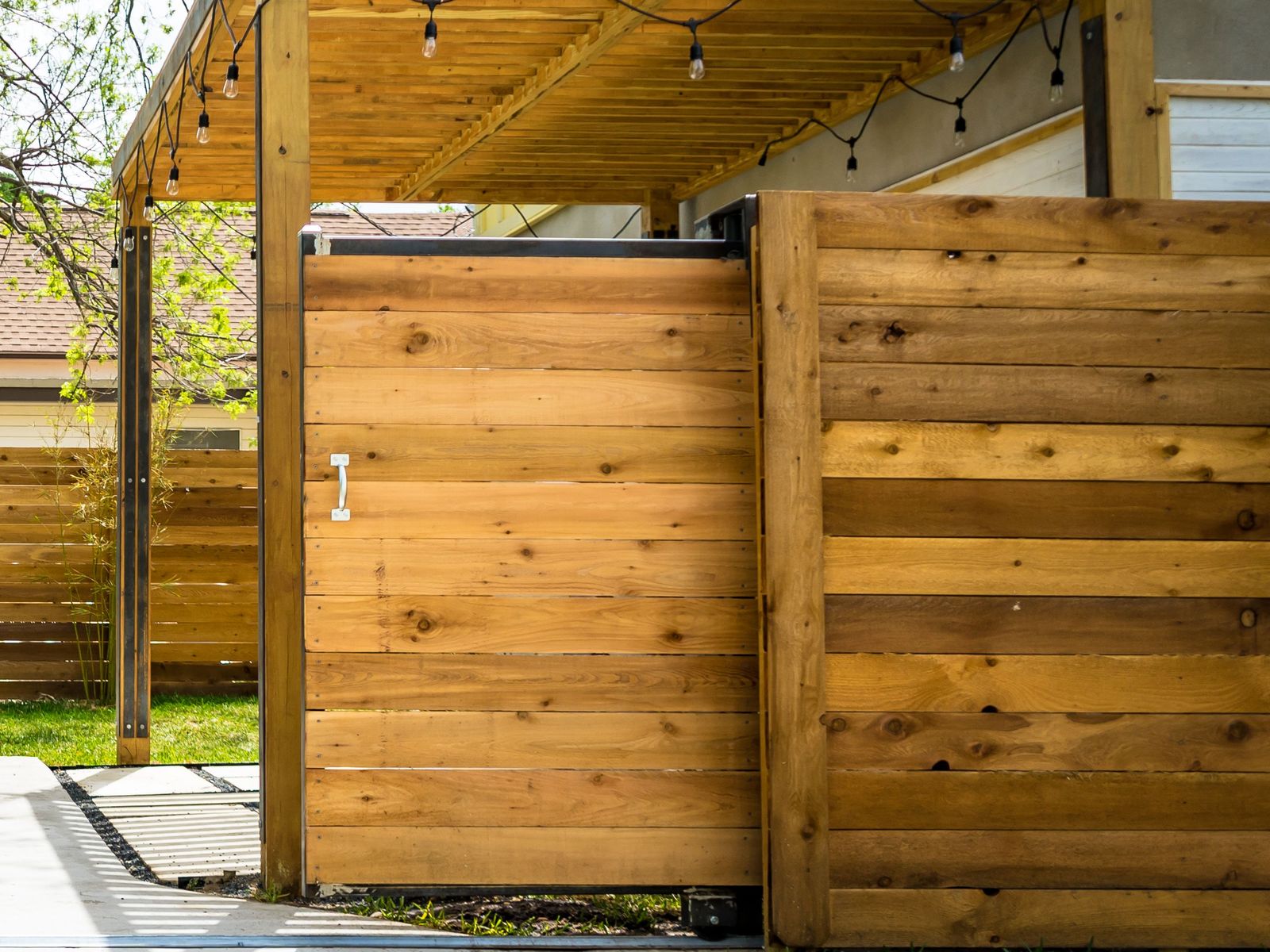
Cedar boards on a welded steel frame, so the gate stays square as the wood ages. It matches a wood privacy fence and gives full privacy at the drive.
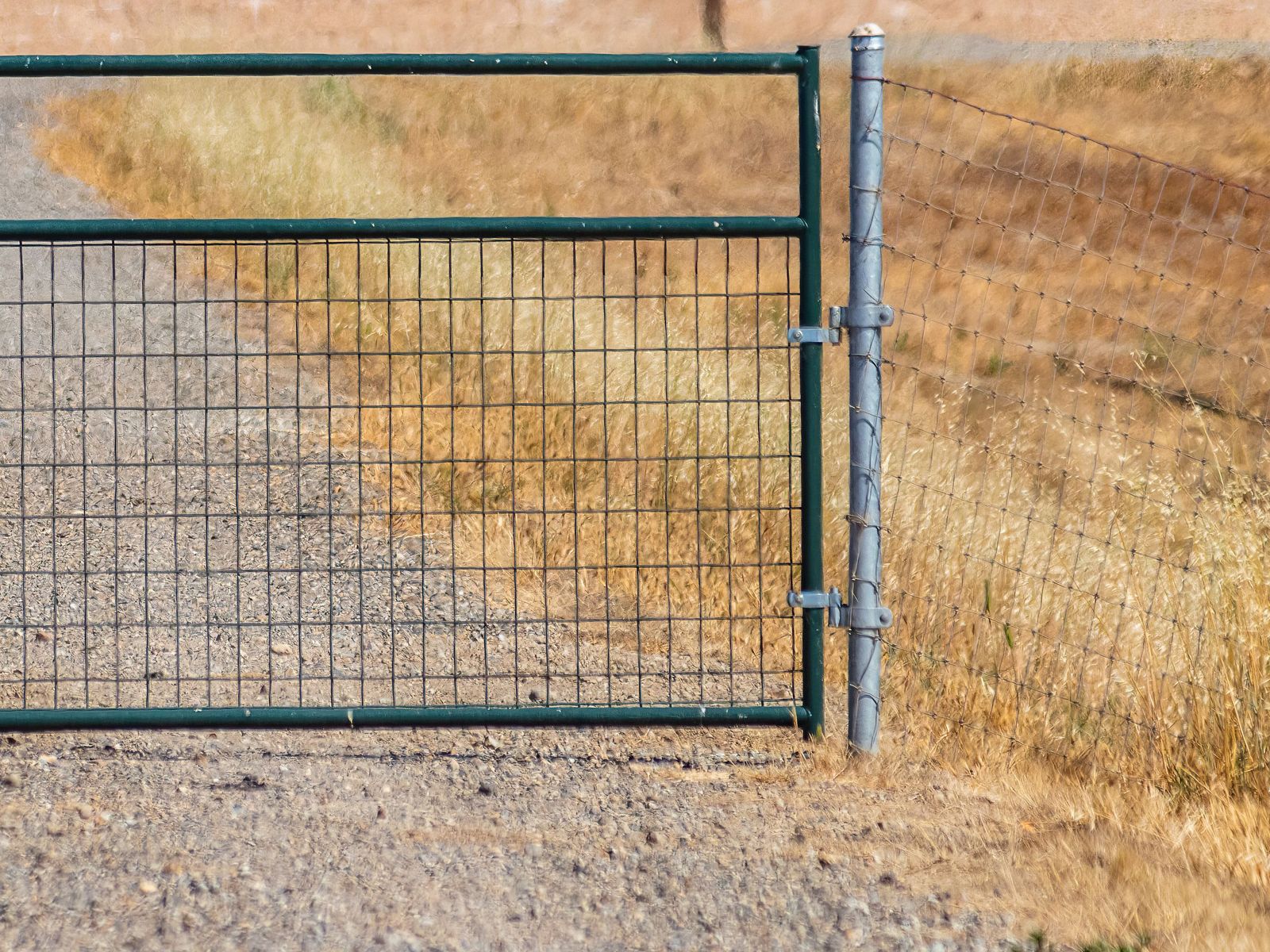
Welded pipe with wire or panel infill for acreage entrances. See ranch fencing.
A solid wood gate weighs far more than an iron picket gate of the same size and catches wind like a sail. We size hinges, rollers, posts, and the operator to the actual gate.
A gate is a lever, and every time it swings, it pries on its post. Sagging gates almost always come down to a post that was set too shallow, and in Del Rio that usually means the installer hit rock and stopped.
We bore gate post footings through caliche and limestone and make them deeper and wider than fence post footings. For a gate you drive a truck and trailer through, we size the opening to the equipment, usually 12 to 16 feet.
If there is any chance you will automate the gate, tell us before we pour footings. Conduit for power and controls goes in the ground first, and operator mounts are much easier to plan than to add. See gate operators.
Inside city limits, a new driveway gate built as part of a new fence falls under the city fence permit, and placement near the street is something we confirm with the city first. We file it for you. See the Del Rio permit guide.
It depends on your lot. Swing gates need a clear arc and level ground. Slide gates need room along the fence and handle slopes easily. On caliche and gravel drives, a cantilever slide gate is often the best choice because it has no ground track to fill with rock and dust.
A slide gate that hangs from rollers mounted on posts beside the opening, so it never touches the ground. There is no track to clog, which makes it well suited to Del Rio drives. It costs more than a track gate but needs less service.
Wide enough for what you drive through it. Twelve feet is a comfortable minimum for most homes, and 14 to 16 feet is typical for a truck with a trailer. We measure your opening and your equipment.
Almost always because the gate post moved, not the gate. A post set too shallow, which in Del Rio usually means one set on top of rock, leans under the weight over time. We bore gate post footings deep and wide to prevent it.
Yes, but it is easier and cheaper if we plan for it at the start. Conduit goes in before concrete, and the gate can be built with the mounts the operator needs.