Elevation F-5: brace assembly and wire runs
Net wire that holds goats and sheep, barbed wire for cattle, welded pipe at the entrance, and corners braced to stay tight on rocky ground.
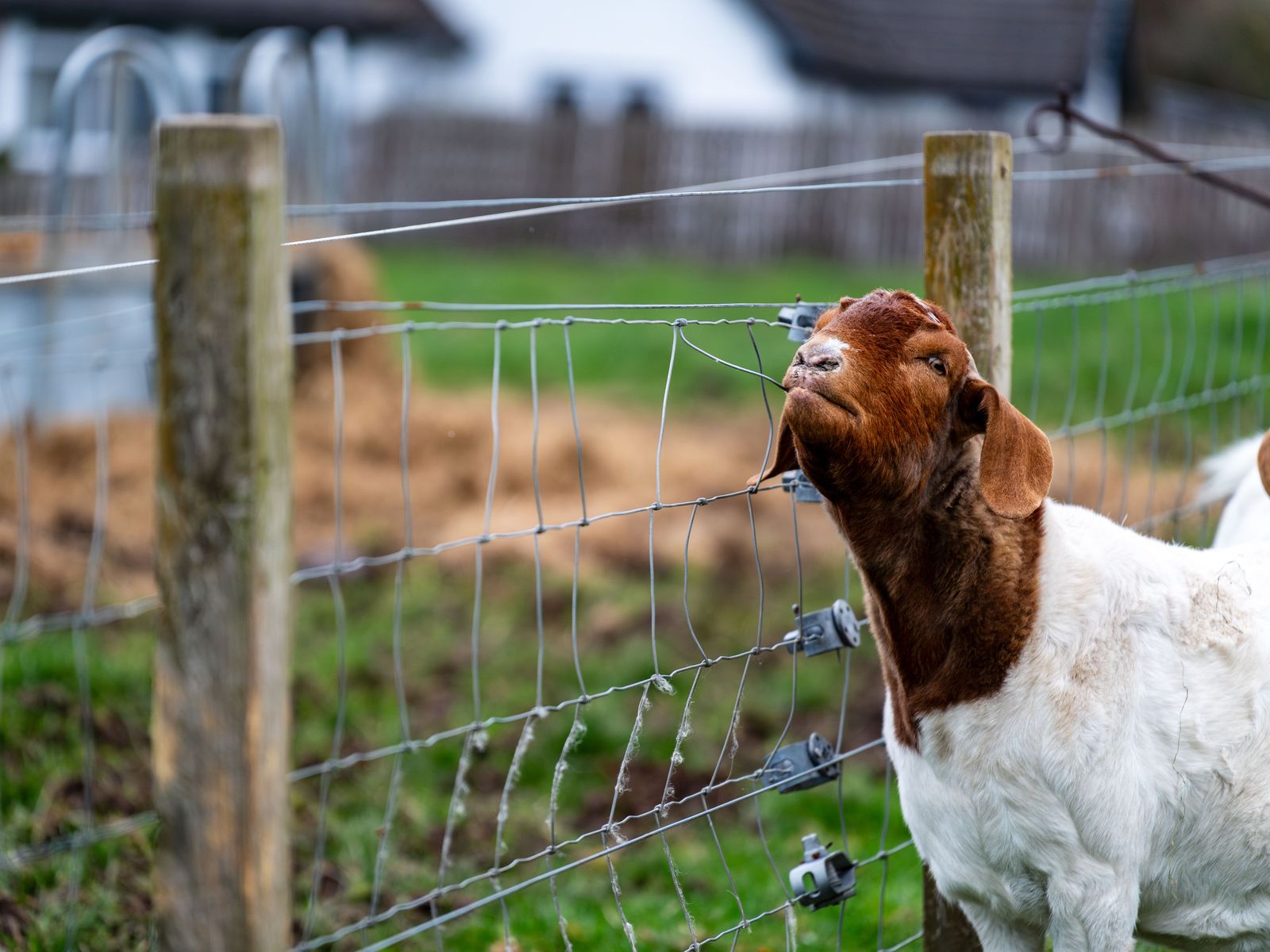
Val Verde County is goat and sheep country, and goats are the hardest animal there is to fence. They climb, squeeze, and lean until something gives. Barbed wire alone won't hold them.
Woven net wire with small openings at the bottom, stretched tight between braced corners, is what works. Fixed-knot wire stays tighter under livestock pressure than hinge-joint wire and holds its shape longer, and we will price both so you can compare. An offset hot wire along the inside stops goats from leaning on the fence at all.
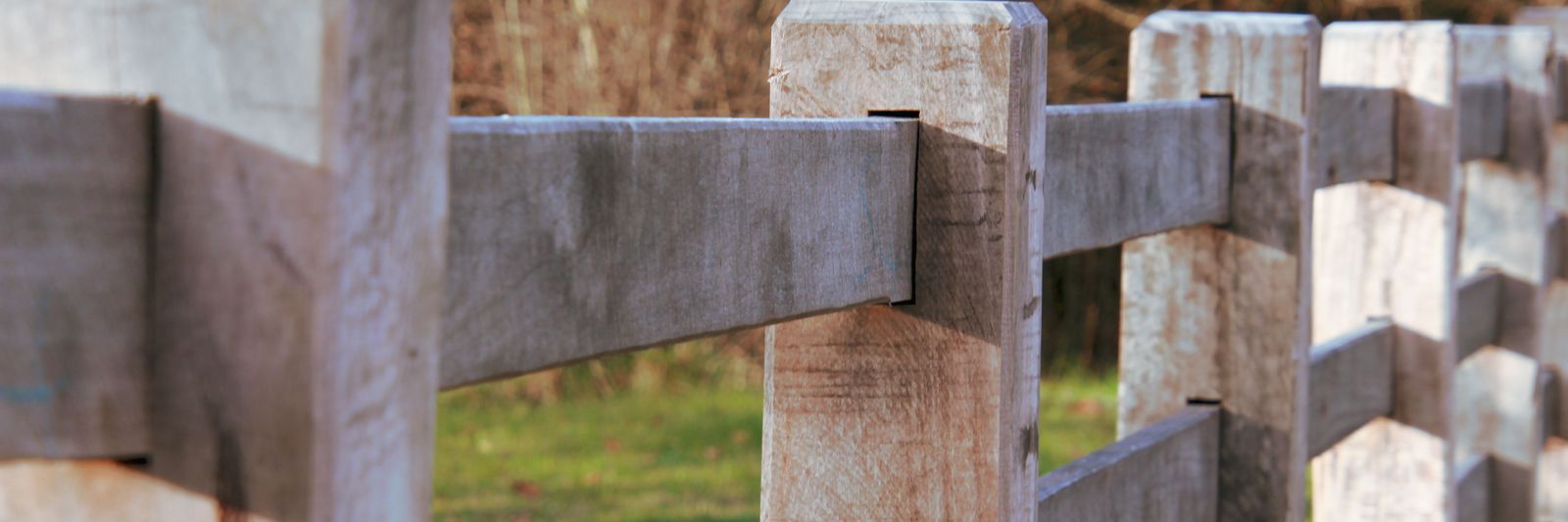
A wire fence is only as good as its corners. Every corner, end, and gate gets an H-brace, two heavy posts tied together with a cross member and a tension wire, because the whole run of wire is pulling on it.
On Val Verde County ground, getting posts in is the real work. Driven T-posts stop at the rock, so we bore corner and brace posts into limestone and set them in concrete. Line posts are driven where the ground allows and drilled where it doesn't. That rock work is priced openly on the quote, section by section if the ground varies.
Spend money on the corners and you can save it on line posts. Skimp on the corners and the best wire sags within a year.
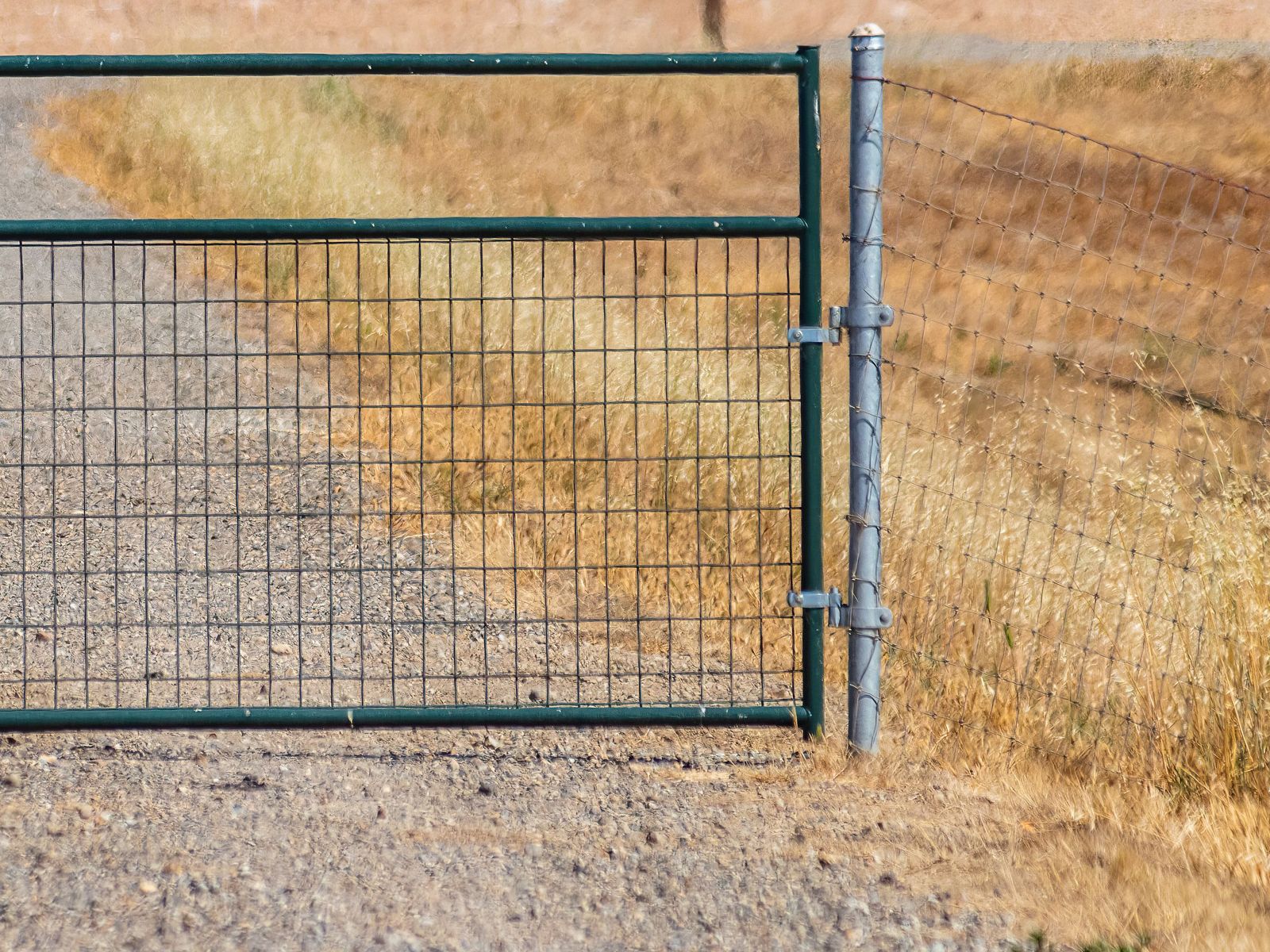
Welded pipe fence costs more per foot than wire, so it goes where it earns it: along the road frontage, around the house and pens, and at the entrance. Pipe gates are sized for what actually comes through them, usually 12 to 16 feet for a truck and trailer.
For an entrance you want to open from the truck, see gate operators. Solar-powered openers make sense on remote acreage without power at the gate.
Most fence lines need some clearing first: brush, cedar, and mesquite along the line. We clear what the fence needs and tell you up front what is included.
Acreage outside Del Rio city limits isn't under the city fence permit. Inside city limits, the normal city permit applies, and the Del Rio permit guide explains it.
Woven net wire with small openings at the bottom, stretched tight between H-braced corners. Barbed wire alone won't hold goats. An offset electric wire on the inside keeps them from leaning on and stretching the fence.
Corner, brace, and gate posts are bored into the limestone with a rock bit and set in concrete. Line posts are driven where the soil allows and drilled where it doesn't. Rock work is priced openly on the quote.
Fixed-knot wire costs more but stays tighter under livestock pressure and lasts longer, especially with goats. Hinge-joint is fine for cattle and lighter-duty fencing. We can price both.
Wide enough for what comes through it. For a truck with a stock trailer, 12 to 16 feet is typical. We size gates to your equipment.
Property outside Del Rio city limits isn't covered by the city fence permit. Inside city limits, the standard city permit applies. We can confirm which side of the line your property is on.